Author: ionata_admin

  • A Hmong Community Cook Up

    A Hmong Community Cook Up

    Paying tribute to the history and culture of our Hmong growers and supporting them in response to the effects of COVID-19

    The Community Cook Up, a collaboration between Eat Well Tasmania, The Migrant Resource Centre Kitchen and The City of Hobart, showcased several recipes developed with the Hmong community in celebration of their summer produce.

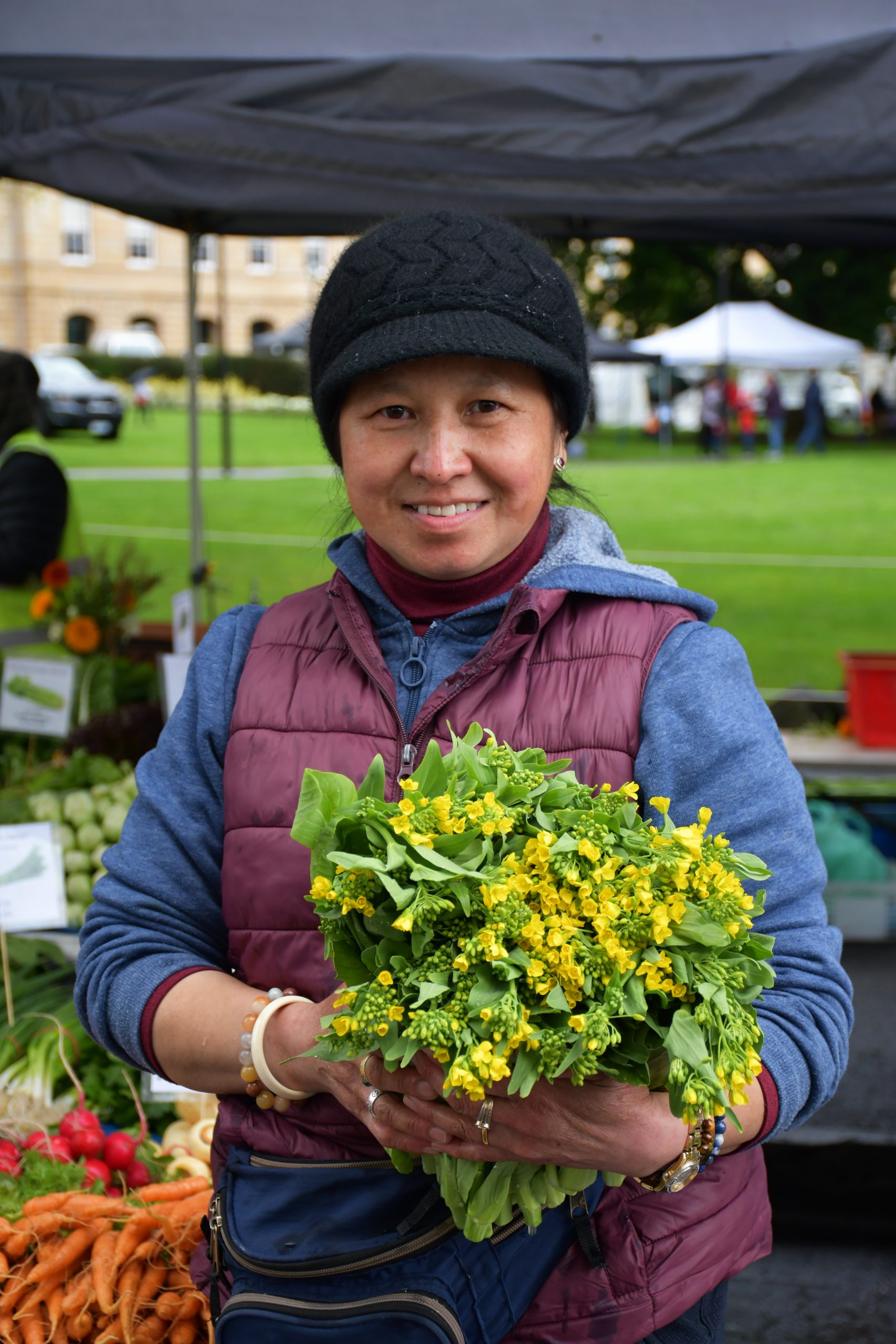
    Wandering through the Salamanca Market on a Saturday morning you’ll find the Hmong producers; their stalls packed with fresh and tasty veg. Amongst the carrots, beans and the familiar favourites of broccoli and beets are some unusual varieties—Shiso, Amaranth and Thai Purple Basil are just some of the specialty herbs grown by the Hmong Community.

    Speciality varieties can make shoppers unsure. Together, with the MRC Kitchen and Hmong Community, we set out to de-mystify these common Asian herbs and ensure market-goers head home confident and eager to discover the joys of cooking with Hmong produce.
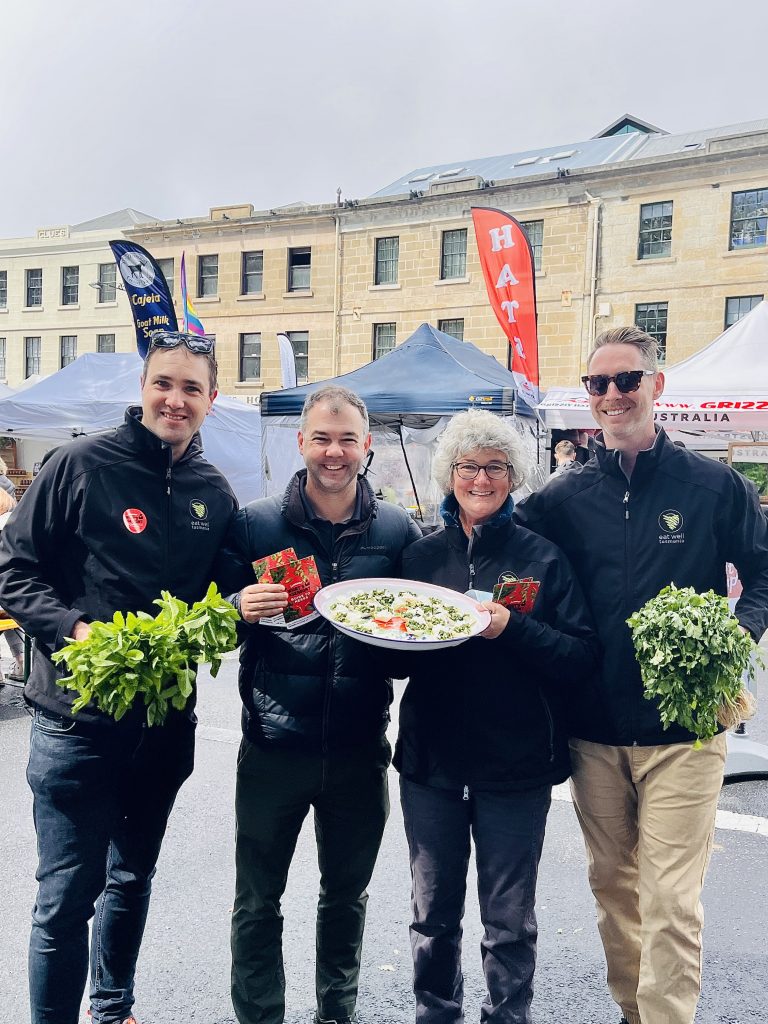
    Pictured above: The Eat Well Team serving up Larb at The Community Cook-up.

    Kang Kong—also called water spinach—is a luscious green vegetable with a mild flavour. Kang Kong can be found all year round at the Hmong produce stall and is perfect as a salad base or tossed through stir-fries.

    Using Kang Kong as our base, we created a seasonal Larb (Larb meaning ‘good luck’ or ‘prosperity’ in Hmong culture). Larb is a traditional fragrant herb salad, often featuring finely minced meats or tofu and accompanied by punchy flavours of chili, lime and fresh herbs.

    Next we whipped up a quick and easy No Waste Stir-fry—a recipe from the MRC Kitchen and inspired by the Hmong community. Hmong people dislike wasting food and when herbs and vegetables are used in cooking, the whole plant is used (stems and all). Customers were surprised to find often overlooked parts of the veg (beetroot leaves and herb stems) to be tasty and flavourful, as we served up mini tasters of our No-Waste Stir-fry (pictured below).
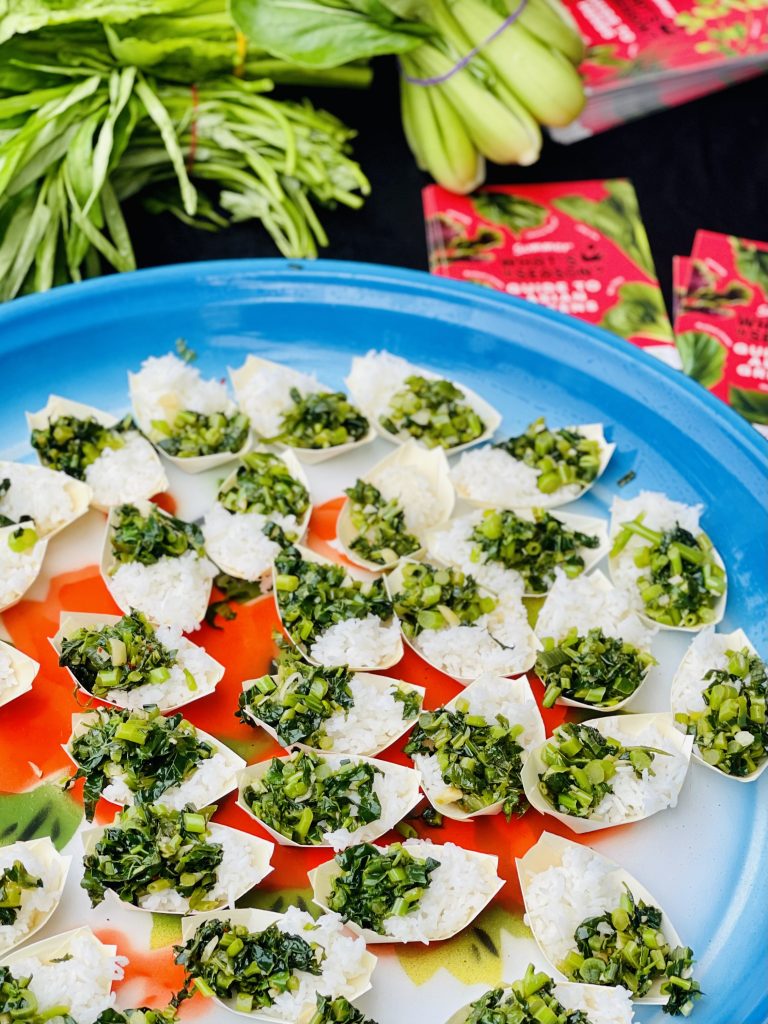
    Our No-Waste Stir Fry is packed with seasonal Hmong produce and makes the most of the whole veg—nothing goes in the bin!

    The Community Cook-up recipes can now be found here, for you to try and enjoy at home.

    The Community Cook-up is a collaboration between Salamanca Market, Eat Well Tasmania, The Migrant Resource Centre Kitchen and the Hmong community growers who can be found each Saturday in the fresh produce section of Salamanca Market on Gladstone Street.
  • Home Harvest

    Home Harvest

    You don’t need a ton of space, time or expertise to garden—you don’t even need a backyard.

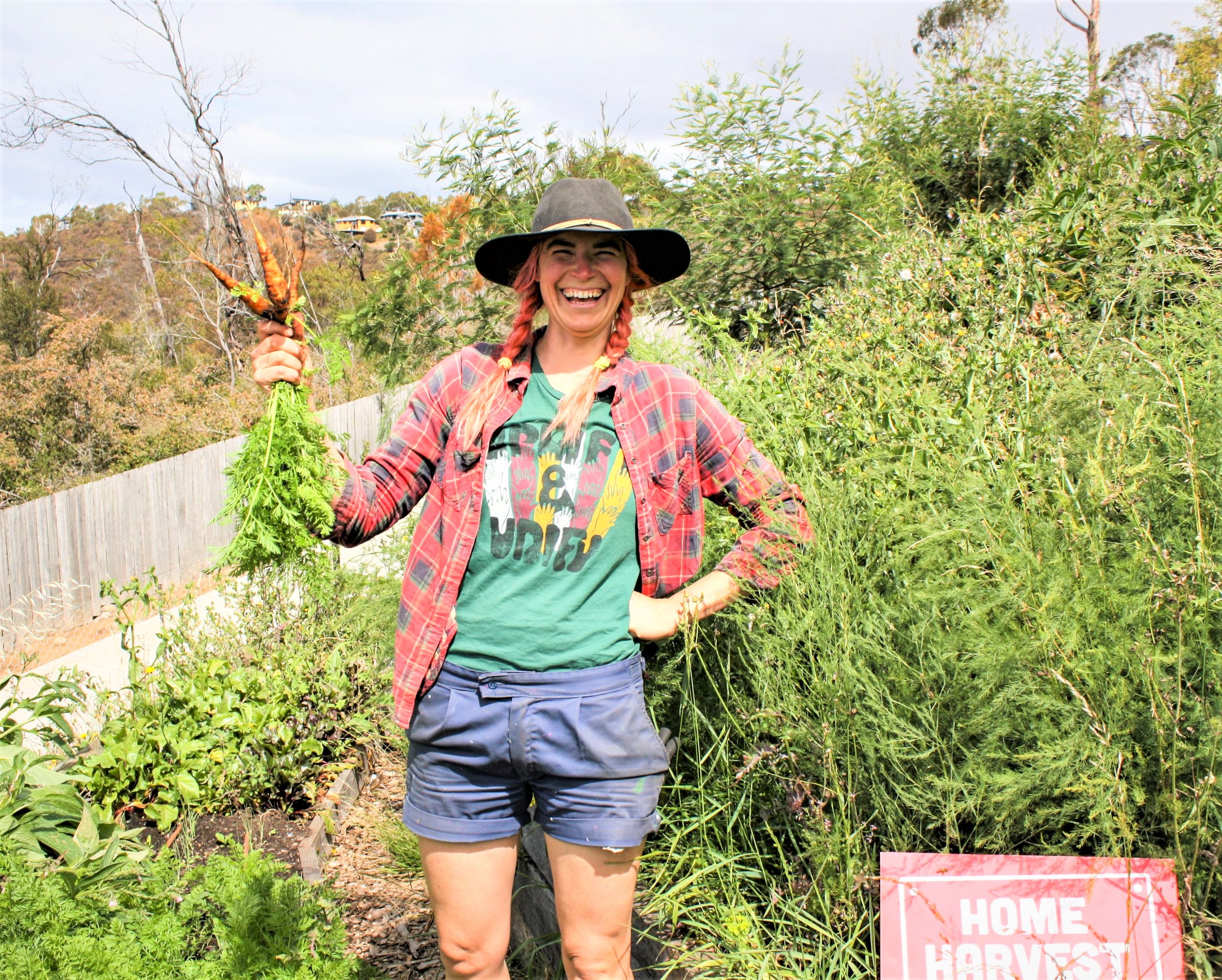
    Home Harvest is a one day event where edible gardeners open their gates for people to come and look, learn and leave inspired, to create something similar in their own backyards.

    Home Harvest 2021, a Good Life Permaculture initiative, showcased gardens and gardeners of all types from across the city of Hobart.

    The Eat Well Team visited the gardens and interviewed the Home Harvest hosts—and our take away of the day? If you have a sunny window and a healthy dose of patience then you too can grow food—even if it’s a pot of herbs!

    Here’s a peek into six stellar home gardens from across the City of Hobart. Gardeners—Abby, Su, Tim, Wendy and Tracey—share their stories and advice.

  • Celebrating Spring With Rhys Hannan

    Celebrating Spring With Rhys Hannan

    Spring is here, what’s in season?

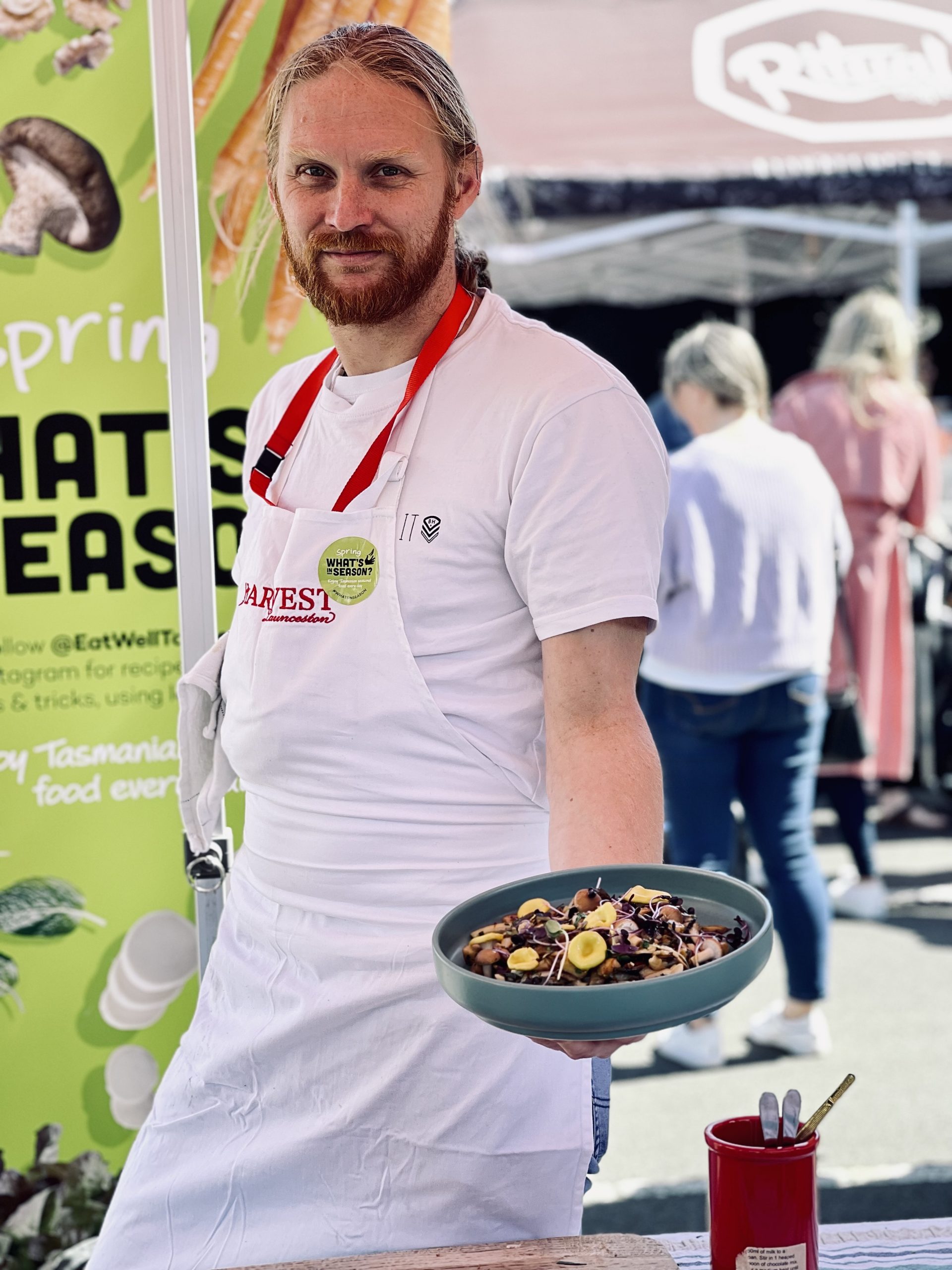
    Young spring vegetables are back in the markets again and to celebrate their arrival we’ve partnered with Rhys Hannan, Market Manager at Launceston Community Farmer’s Market to launch our Spring Produce Guide.

    The seasonal guides encourage Tasmanians to enjoy an exciting variety of local produce via the promotion of recipes, cooking tips and seasonal produce lists. During spring, the guides will be available at the Harvest Market, so pop down this Saturday and discover what’s in season.

    Seasonal, Tasmanian produce should play a massive role in how we look after ourselves and maintain our health and wellbeing, yet only 7.5% of us eat enough fruit and veg.

    In a state known for its abundant production of high quality and wide range of fruits and vegetables, this is a strange paradox.

    Choosing and working with seasonal food isn’t hard, but it does require a little know-how and planning. By focusing on locally-grown food, you don’t have to navigate seasonality—that just falls into place naturally. If the farmers in your area can’t grow it, they won’t sell it—eliminating the mystery for you.

    Knowing how to create simple and delicious meals at home shouldn’t be a chore; keep it simple by keeping it seasonal. Cooking with seasonal produce means you are eating food when it’s at its freshest and most nutrient-dense.

    Hearty, vibrant spring greens are flooding into the markets right now—when you focus on local food you discover that the options for cooking with seasonal fruit and veg are limitless.

    Give our spring recipes a try this season, you can find them here—enjoy!

  • Taroona High School Think Local

    Taroona High School Think Local

    How can we create a business, product or proposal that supports food security in our local community?

    That’s the question Taroona High School students set out to solve in their newly launched Food Security Integrated Learning Program. 

    The Integrated Learning Program allowed students to complete half of their science and English curriculum while solving real food issues within their immediate community. 

    Learning was designed and delivered by specialist teachers in partnership with Industry experts such as CSIRO and our team at Eat Well Tasmania. Students studied the topic of food security through an integrated learning model using a combination of investigation, explicit learning and hands-on experiences.  

    Over Term One and Two, students investigated questions such as: How can we use farm-bot technology to grow vegetables? What are the best crop options for my balcony? How can I use technology to choose the best site for food production? How can I influence the council to make businesses share their food waste? 

    As a supporting partner of the program, we were excited to provide students with a real-world context to motivate them to become involved and see the relevance of the food security issue.  

    Students delivered their final proposals on November 3rd—a deep empathy for community coupled with passion to solve the problem, made for inspiring and creative solutions.

    Projects included hydroponics kits to enable consumers to farm fish at home, community garden installations, culture and awareness-building campaigns, and projects that looked at food waste and their school canteen. 

    Ultimately students understood that they could be problem solvers through their learning—and that solutions must provoke from community an understanding of partnership and empathy, to inspire change.

    It was a pleasure to observe students’ growing understanding of their local food systems and find ownership and a voice in creating solutions. 

  • Your Guide to Roasting Autumn Veg

    Your Guide to Roasting Autumn Veg

    Autumn presents us with the perfect partnership: cooler weather and seasonal starchy veg.

    While we’re advocates for a salad in all seasons, summer has come and gone and perhaps also the desire to eat alfresco with bowls of crisp summer greens. A change in climate calls for a change in cooking—it’s roasting season.

    Starchy young veggies like pumpkins, parsnips and beets are hitting market stalls. And while there’s a hundred delicious ways to prepare and eat, we’re advocates for a simple roast. We caught up with Tasmanian Chef and Food Educator Kirsten Bacon to learn more about simple and easy ways of roasting veg this season—enjoy!