Category: Cooking

  • Meet the Chef: Thomas Pirker, Grain of the Silos

    Meet the Chef: Thomas Pirker, Grain of the Silos

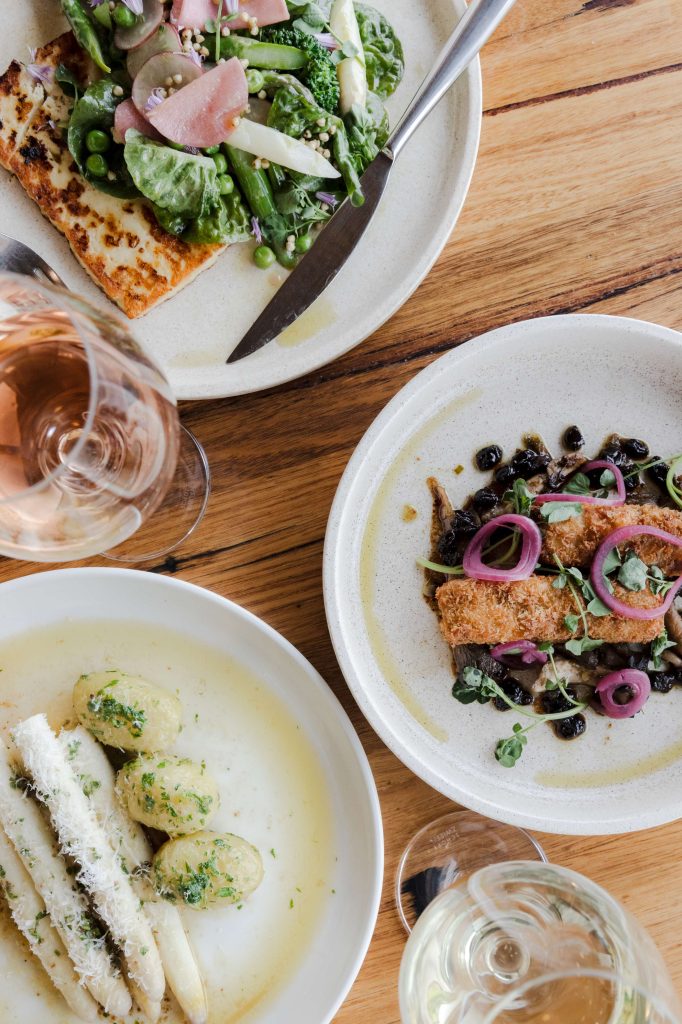
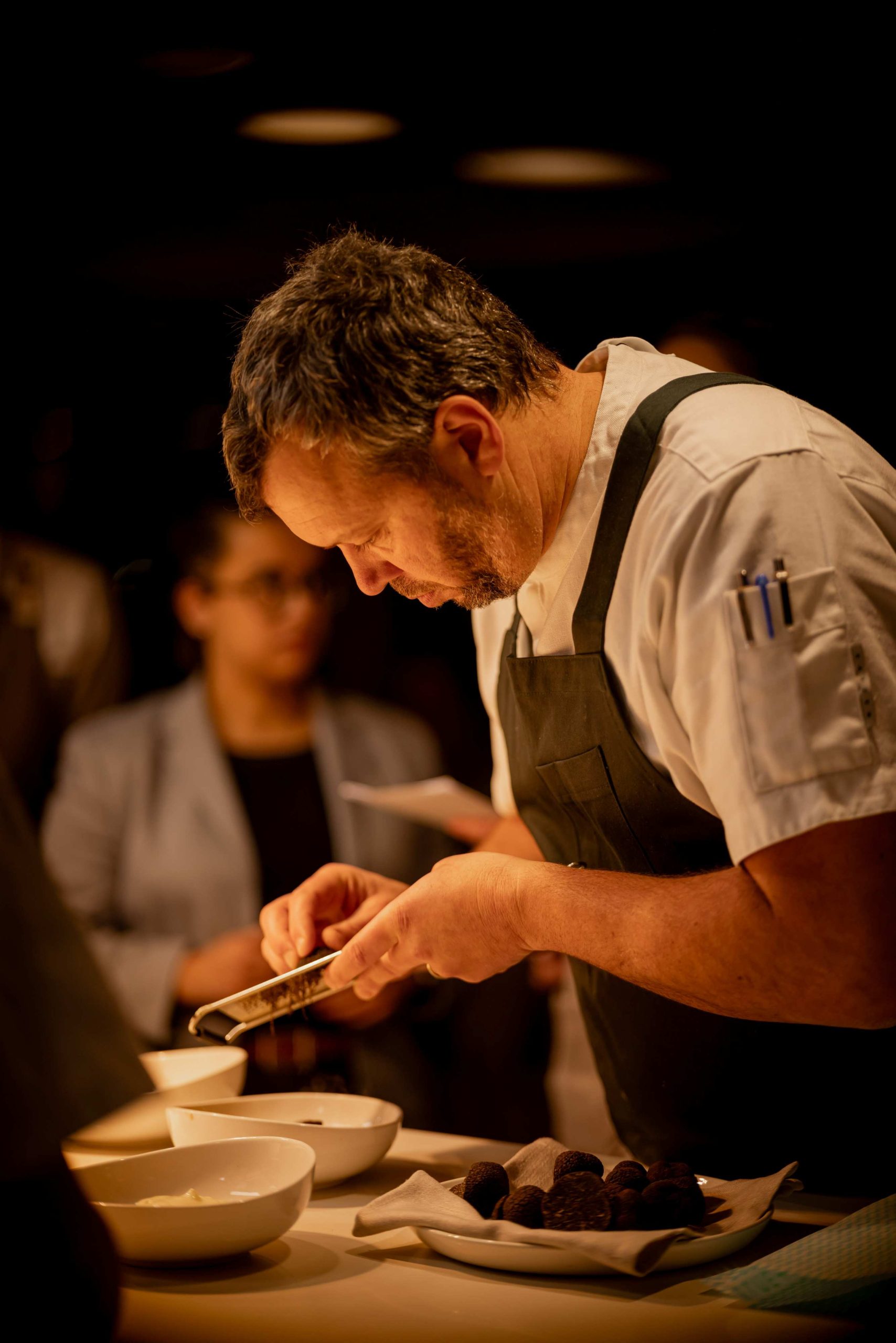
    From Austria to Northern Tasmania, Chef Thomas Pirker has built a reputation for showcasing the very best of Tasmanian produce at Grain of the Silos at Peppers Silos Launceston. We caught up with Thomas to chat about winter ingredients, working closely with local growers, and why Tasmania’s food story continues to inspire him every day.

    You’ve cooked in some incredible places around the world before making Tasmania home. What first drew you here, and what made you decide to stay?
    The story with Tasmania actually began long before we moved here. My wife and I came here for our honeymoon and then returned for another holiday. We spent time exploring the state and said to each other that if an opportunity ever came up to live here, we’d seriously consider it.
    For a chef, Tasmania is incredibly special because of the produce. The freshness, the quality and the access to great ingredients is unlike anywhere else. That’s one of the biggest drawcards for me.
    I also love the lifestyle. It’s a little quieter, a little slower and a little more relaxed, and that’s something we’ve really come to appreciate.

    Winter can be one of the more challenging seasons for sourcing produce. How does that shape the way you plan your menus?
    When I first arrived seven years ago, winter was definitely the hardest time of year. June, July and August could be quite challenging because there simply wasn’t as much local produce available.
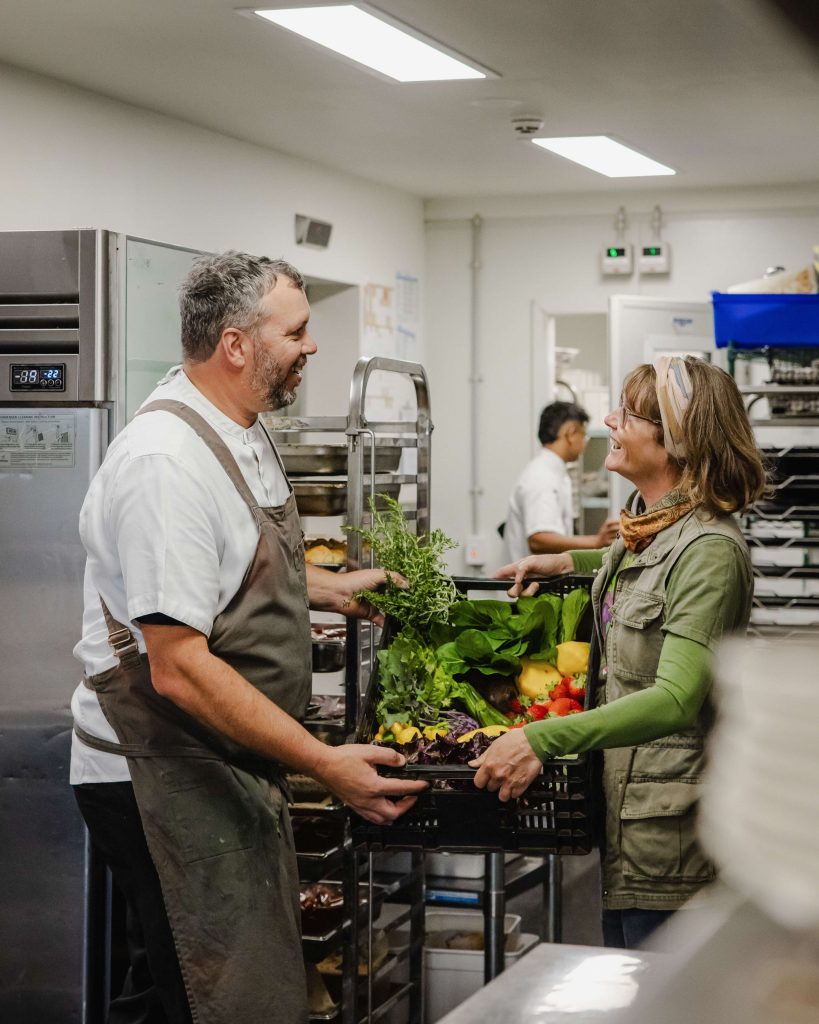
    Over the years we’ve built strong relationships with local growers, and that’s completely changed the way we work. We meet with our growers a couple of times each year to discuss what grew well, what didn’t, and what we’d like to see in future seasons.

    Wouter from Seven Springs Farm has been working with us for around five years, and together we’ve been able to trial and grow vegetables that thrive through winter. It’s the same with Kate from Karoolalla Farm, we work closely together and we continually look for opportunities to extend the season.
    The gaps are getting smaller every year. We’re now growing rocket through winter, which is fantastic, and we’ve also become much more focused on preserving produce when it’s at its peak. We preserve everything from apricots to asparagus and a range of vegetables during the warmer months so we can continue showcasing Tasmanian flavours throughout winter.
    It’s been a long journey, but we’re getting closer to sourcing local produce all year round.

    Grain of the Silos has built a strong reputation for celebrating Tasmanian producers. Why is it important to showcase not just the food, but the people behind it?
    Every great restaurant needs a story.
    For us, that story has always been built around the growers and producers in our region. The stronger those relationships become, the better the food we can put on the plate.
    Supporting local producers also means supporting our community. At a time when so much food production is becoming larger and more corporate, it’s important that local farmers continue to grow, survive and succeed.
    It’s never simply about getting the cheapest price. It’s about building long-term relationships with people who care about producing great food in the right way.
    We spend time listening to our growers because they face challenges many of us don’t see. Whether it’s changing weather, soil conditions or seasonal pressures, understanding what they’re experiencing helps us plan together and create a stronger local food system.

    Are there any winter ingredients you think deserve a little more attention?
    Absolutely. I think there are plenty of fantastic vegetables that people simply aren’t familiar with anymore.
    Ingredients like black salsify, celeriac and Jerusalem artichokes are beautiful winter vegetables, but they can sometimes be difficult to introduce because people don’t know what they are or how to cook them.
    That’s where our front-of-house team plays an important role. They can explain the ingredients, tell the story behind them and encourage people to try something new.
    Sometimes it’s simply about presenting an ingredient in an unexpected way. We once made a Jerusalem artichoke ice cream, and people were fascinated. Once they tasted it, they loved it.

    Many home cooks can feel a little uninspired during winter. What’s one piece of advice you’d give them?
    Don’t be afraid to try something new.
    Whether it’s cooking with a different vegetable or experimenting with an ingredient you’ve never used before, it doesn’t have to be complicated. Read a recipe, give it a go and have some fun with it. Trying something different is part of the enjoyment of cooking!

    If someone visited a farmers’ market this weekend, what would you encourage them to look out for?
    Winter vegetables are incredible right now. The cooler weather helps produce stay crisp, fresh and full of flavour.
    Truffles are also in season and are fantastic at the moment.
    I’d also encourage people to enjoy Tasmania’s seafood during winter. The colder water produces beautiful seafood that’s well worth seeking out.

    Do you have a favourite season for cooking?
    I’d have to say spring and autumn.
    I grew up in Austria, where asparagus is a huge part of the food culture, so spring has always been a favourite. I’m very happy that asparagus grows so beautifully here in Tasmania as well.
    Autumn is another wonderful season because the range and quality of vegetables is simply outstanding.

    Launceston was recognised as a UNESCO City of Gastronomy in 2021. What does that recognition mean for Northern Tasmania?
    I think it’s a tremendous opportunity for the region.
    Recognition from UNESCO shows that we’re doing something right. It’s not something that’s awarded lightly, and it gives people around the world another reason to discover what Tasmania has to offer.
    If the region continues working together and supporting one another, I think it has enormous potential to attract more visitors and strengthen Northern Tasmania’s reputation as a truly world-class food destination.

    Just for fun… what’s your favourite vegetable?
    Salsify.
    And your favourite fruit?
    That’s a much harder question! I have to go with apricot.

    The Wrap
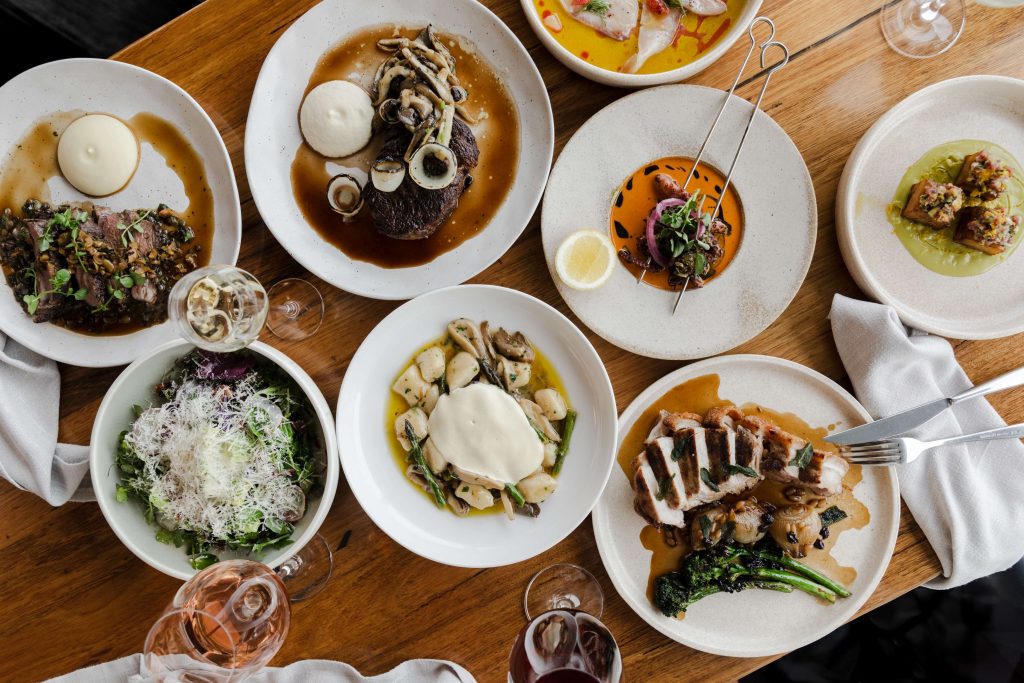
    Explore an abundant harvest gathered from port to wilderness at Grain of the Silos.
    From Flinders Island Wallaby to Boomer Bay Oysters to the creamiest Dutch potatoes – this marvellous island of ours has been scoured for perennial favourites and seasonal treasures to take the lead on a carefully curated menu.
    Where: Grain of the Silos, Peppers Launceston
  • Interview with Jay Patey

    Interview with Jay Patey

    We spoke to Jay from Pigeon Whole Bakers as part of Don’t Bin Your Bread – a story about reducing food waste.

    How did you get started baking?

    I’ve been baking for 15 years now. Going back to the early days, it was like this very simplistic yeasted dough. I really wanted to go back to the roots of baking in a woodfired oven. I started to experiment with sourdough and then I got the ‘baking bug’. I got to the point of like, I need to learn more. I was enjoying the process and watching our customers enjoy it.

    You call yourself a ‘traditional Baker’, what does that mean exactly?

    We basically bake in the old style of sourdough bakery, where we’re using minimal ingredients, focusing on good quality flour, and old techniques that have been around for a long time. Baking is a wild journey. You’re working with raw natural ingredients, and there are nuances in our flour, season to season. It takes about two days to three days to make each loaf, so there’s a lot of time in between with mixing, resting those, and baking those to get to our customers.

    I’m blown away by the many hands that make one loaf of bread. How many people are involved?

    The team is just incredible. From delivery drivers, the people that wash the dishes, the bakers, the pastry team, our retail team, the management behind the teams. There are so many people involved now we have over 60 employees in the game. There’s been a lot of learning curves over the last 14-15 years to get to this point.

    How did you decide which types of breads you wanted to make?

    The breads were designed basically by thinking about how people would use them first. We’ve added a few extra things along the way but essentially, a lot of our core range hasn’t really changed. We went for a classic sourdough style, that’s something the kids and the parents can enjoy. There’s also a rye and molasses bread that’s good for sandwiches, but also for cheese and charcuterie.

    How do you think eaters can reconnect to their food?

    When you’re about to potentially throw away a loaf of bread– take a moment to think about the process and the journey of the loaf, the amount of people and invested skill that have been behind getting that to your table. To then just pick that up and disregard it is at the end of the day, pretty disrespectful. Don’t do it!

    When looking at food waste, households are the biggest culprit. Do you have any tips for eaters to help avoid this?

    If you realise that you’ve got too much bread – cut it up into single portions and put them in a ziplock bag in the freezer. Bread will stay well up to six months in the freezer. If you feel like all that loaf has been there for a few days – before you go buy another one, do something with that one. Make some croutons with some olive oil, some salt, and herbs out of the garden. You can put them into a little sealed glass jar in the cupboard and label it for later – and make sure you use them!

    What’s next for you and Pigeon Hole?

    I think baking is ingrained in me now. I love working with a team and instilling my knowledge. I’m going to be doing this for a while. I’m not going anywhere. We’re playing in the league. That’s where we decided to play and that’s our job. Honestly, from the outside we make it look easy. We are professionals, and we just love it.

  • Interview with Tom Wescott

    Interview with Tom Wescott

    We spoke with chef and food waste advocate Tom Wescott as part of Too Good To Waste: A Story about Tasmanian Food.

    At your restaurant, Tom McHugos, how did you do the pub thing? How do you get people to try something different, and perhaps appreciating the produce in a different way?

    The vegetables had always been a difficult sell for people that are just coming for a pub meal. But also, when you don’t force it down their throat, and you just let that happen naturally – they would often come back and they would start wandering around the menu and saying, “oh, what’s that? Oh, maybe I’ll just have some of that”. Because it tastes good, because the produce is good. They’re more likely to want to investigate further and try something that they’ve maybe never had before.

    How would you describe your cooking ethos?

    Our approach to food has always been one of community. We would definitely put the producers and the vegetables and the meat growers ahead of technique. I think stylistically my approach to development of dishes and menu items is really just waiting for the food to come from the grower, and then just utilising time restriction. I’ve always found that you are more creative when you pushed.

    You’re in a position now where you’re a leading voice in food waste reduction — both in your own workplace but also broader hospitality sector. What are you trying to change?

    There’s a whole slew of like education that is missing from not only like a commercial environment, if cooking into the workforce and not know how to deal with food, which is their purpose in life. How can you expect a family of five to know how to look after the vegetables, so they don’t waste in the fridge?

    Do you think that a solution to food waste at home is a greater consumer understanding about where their food comes from?

    We make time for things that we care about – and food should be paramount. We should care about that a lot. The fact that you can go and buy vegetables from, you know, a nameless tray or a box or comes in a plastic bag, it really separates you from the identity of what it is to be a food grower. And like, we’re all we’re all human, we all have to eat. There’s a whole bunch of people out there that are dedicating their lives to this. Ultimately, the best way to not waste food is to pre-plan your cooking and re-establishing those connections between people through farmers markets or other places which celebrate produce and community.

    Where do you start when changing people’s practices and views on the issue of waste. Is it, in fact, starting with explaining that food waste is an issue?

    When I hear that the third of the produce is wasted – it’s really upsetting. That is just produce grown in Tasmania, let alone Australia, it’s probably bigger on a world scale. People are aware of food security, and that was made abundantly clear especially since 2020, when supply chains were cut, and people realised that, “hey, we can’t just go out and get whatever we want all the time, whenever we want”. You shouldn’t be like locked in to only using beetroot in winter or autumn, because that’s when they grow well. They grow in summer as well – and they’re amazing. The seasonality of produce can allow you to mitigate waste, because you can just use what is abundant, and ferment and pickle and preserve and dehydrate and actually just eat it.

    We were talking about how focusing on reducing food waste is a joyous behaviour — that kind of frees you up when you ‘ditch the rules’ as you say.

    Yeah, exactly. My mum used to say, “more speed, less haste”. In my mind, this sort of rolls around whenever I’m processing or doing something that’s a little bit mundane. If you just spend a little bit more time playing with your food and allowing yourself the freedom to actually explore what you’re doing, then there is less opportunity to to waste something.

    We’ve talked before about how feels to cook with food grown by people you know and care for. How do you feel about Tasmanian seasonality, and that connection with people too?

    I think Tasmania is a really special place to be given the opportunity to cook. If you can, try to focus and eat what’s available right now and seasonal, maybe even growing something yourself – that is truly Tasmanian. It’s within our heritage, and it could be as simple as cooking from your own garden, or your friend’s garden, or your mum’s friend’s garden. We should really celebrate food grown in Tasmania. It really is too good to waste and there’s no need to be looking elsewhere for it.

  • The story of the arepa

    The story of the arepa

    The Story Festival – sharing fun, food and culture on Hobart’s Eastern Shore.

    The Story Festival is Clarence City Council’s annual week-long celebration of community, diversity and sharing. A series of cooking workshops run across the festival weaved together stories of differing food cultures and the traditional preparations, sharing and celebration of delicious dishes.

    The arepa cooking workshop was a family affair – Grandmother Naty, daughter Milena, and granddaughter Sophia joined to tell the story of the arepa. The workshop began with a theatrical performance from Naty, Milena, and Sophia, before we got cooking in the kitchen to knead, and fry our arepas.

    But what is an arepa?

    Arepa is a type of gluten-free ‘pancake’ – or tortilla – made from corn. The Indigenous tribes that inhabited what is now Colombia and Venezuela were the creators of arepas, which to this day is an integral part of Colombian culture. 

    Corn is an essential ingredient when making the flour of the arepa. Traditionally, people would peel the cob, cook the corn, grind the corn, then assemble the arepas at home.

    When is a good time to eat an arepa?

    Arepas can enjoyed for breakfast, or at lunchtime. They can be served alone, or with a filling of meats, butter, eggs, cheese or other vegetarian options. We enjoyed a delicious creamy mushroom filling with coriander and spring onion, as well as a slow-cooked lamb, and a tasty grilled cheese arepa!

    As Milena shares, “I had the joy of seeing my grandmother and my mother get up at 5am every day to make the arepas. Of course, I imagine that they were not so happy to get up so early to make a bunch of arepas. Fortunately, nowadays this flour is already sold ready to knead, it comes not only ground, but also pre-cooked. What could be easier than that?”

    Follow Clarence Arts and Events for their upcoming events. You can also follow Milena’s upcoming events through Salsita.

    Do you want to come along to a seasonal event? We’ve got you! Sign up to receive our seasonal newsletter to find other great events near you.

    Photo credit: Takani Clark.

  • Celebrating Spring With Rhys Hannan

    Celebrating Spring With Rhys Hannan

    Spring is here, what’s in season?

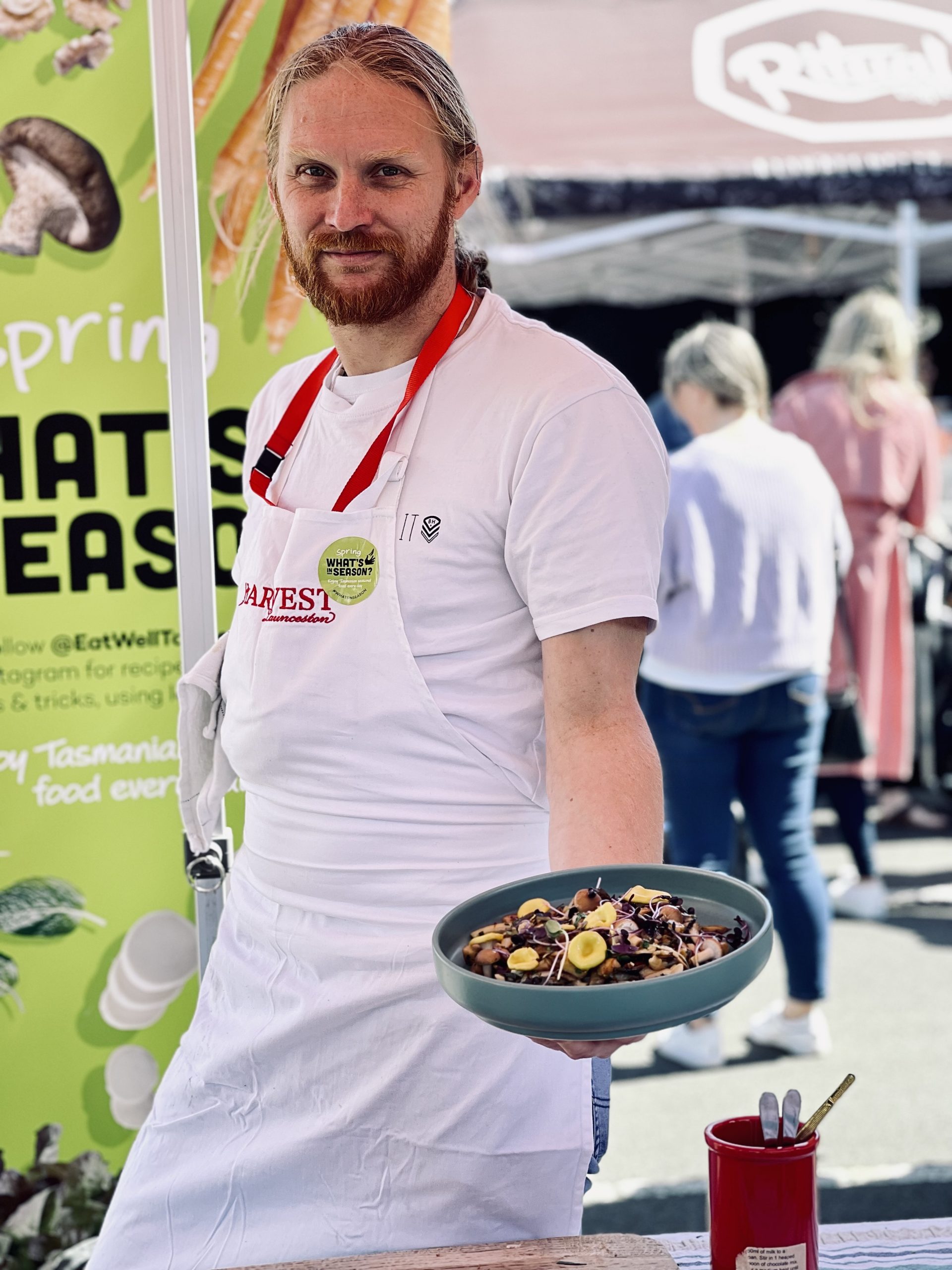
    Young spring vegetables are back in the markets again and to celebrate their arrival we’ve partnered with Rhys Hannan, Market Manager at Launceston Community Farmer’s Market to launch our Spring Produce Guide.

    The seasonal guides encourage Tasmanians to enjoy an exciting variety of local produce via the promotion of recipes, cooking tips and seasonal produce lists. During spring, the guides will be available at the Harvest Market, so pop down this Saturday and discover what’s in season.

    Seasonal, Tasmanian produce should play a massive role in how we look after ourselves and maintain our health and wellbeing, yet only 7.5% of us eat enough fruit and veg.

    In a state known for its abundant production of high quality and wide range of fruits and vegetables, this is a strange paradox.

    Choosing and working with seasonal food isn’t hard, but it does require a little know-how and planning. By focusing on locally-grown food, you don’t have to navigate seasonality—that just falls into place naturally. If the farmers in your area can’t grow it, they won’t sell it—eliminating the mystery for you.

    Knowing how to create simple and delicious meals at home shouldn’t be a chore; keep it simple by keeping it seasonal. Cooking with seasonal produce means you are eating food when it’s at its freshest and most nutrient-dense.

    Hearty, vibrant spring greens are flooding into the markets right now—when you focus on local food you discover that the options for cooking with seasonal fruit and veg are limitless.

    Give our spring recipes a try this season, you can find them here—enjoy!

  • Your Guide to Roasting Autumn Veg

    Your Guide to Roasting Autumn Veg

    Autumn presents us with the perfect partnership: cooler weather and seasonal starchy veg.

    While we’re advocates for a salad in all seasons, summer has come and gone and perhaps also the desire to eat alfresco with bowls of crisp summer greens. A change in climate calls for a change in cooking—it’s roasting season.

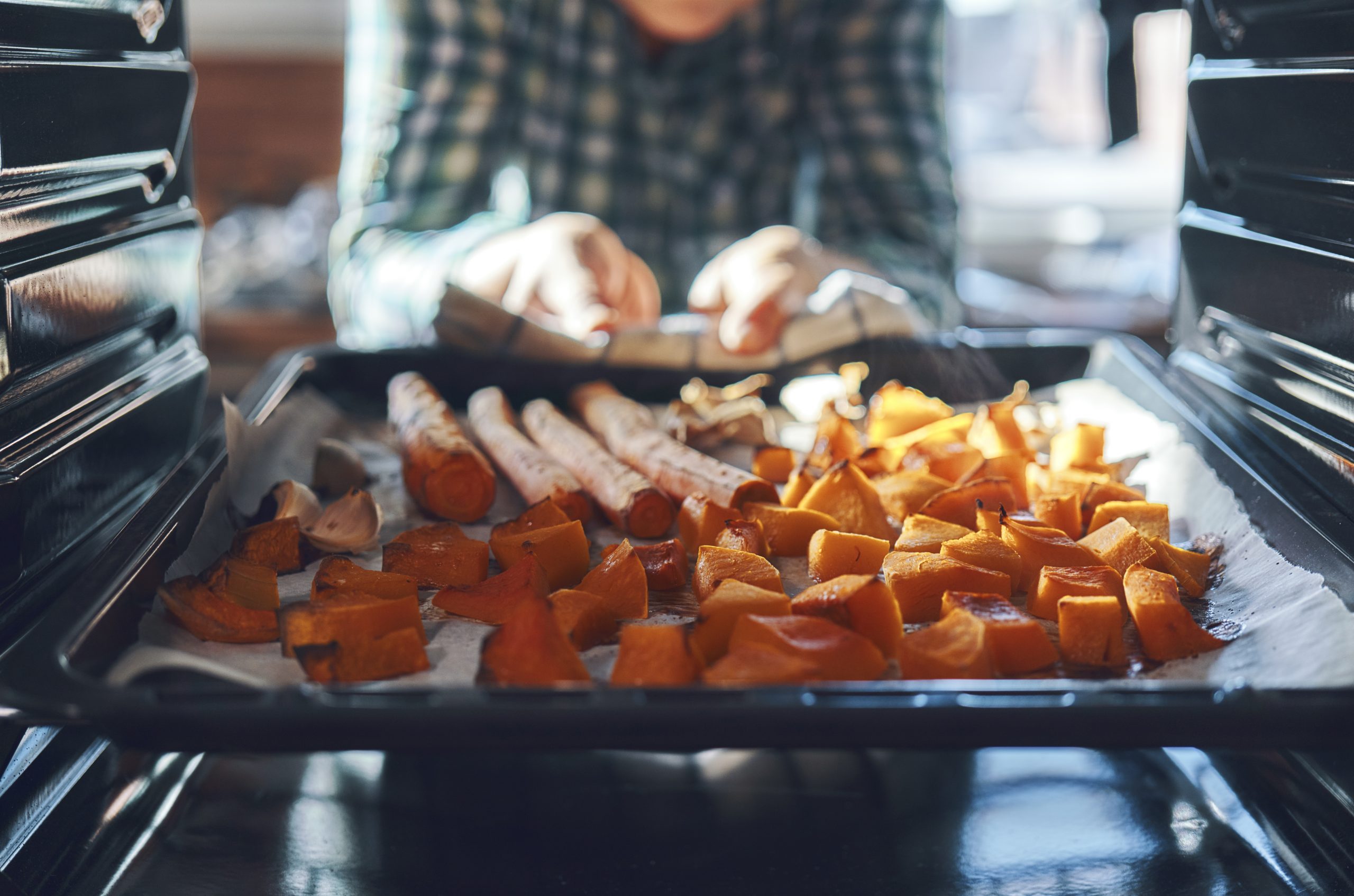
    Starchy young veggies like pumpkins, parsnips and beets are hitting market stalls. And while there’s a hundred delicious ways to prepare and eat, we’re advocates for a simple roast. We caught up with Tasmanian Chef and Food Educator Kirsten Bacon to learn more about simple and easy ways of roasting veg this season—enjoy!